
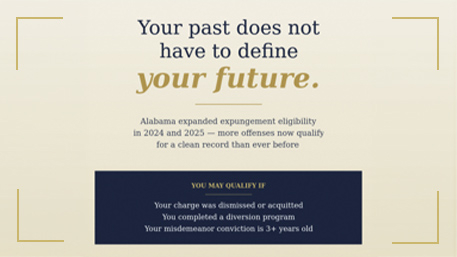
A criminal record can follow you for decades. It shows up on background checks when you apply for a job, an apartment, a professional license, or a loan. For years, Alabama had one of the strictest expungement laws in the country, and only dismissed charges or acquittals were eligible. That has changed, and 2024 brought another round of significant expansions.
If you have been wondering whether your old case can finally be cleared, now is the time to find out.
How Alabama Expungement Law Has Evolved
Alabama first enacted a limited expungement statute in 2014. The Redeemer Act, signed in 2021, was the first major expansion and opened the door to expungement of certain non-violent misdemeanor convictions. In 2024, the legislature passed Act 2024-407, which further expanded eligibility, adjusted waiting periods, and refined the procedural requirements. Additional changes in 2025 streamlined parts of the process for cases that meet specific conditions.
Under current Alabama law, the following categories of records may now be eligible for expungement: charges dismissed with prejudice, charges no-billed by a grand jury, not-guilty verdicts, charges dismissed without prejudice after an appropriate waiting period, certain non-violent misdemeanor and violation convictions after a three-year waiting period, and, in limited circumstances, certain non-violent felony convictions where the person has received a certificate of pardon with restoration of civil and political rights.
What Is Not Eligible
Expungement is not available for violent offenses as defined under Alabama Code Section 12-25-32, sex offenses, most serious traffic offenses including DUI, and moral turpitude offenses with narrow exceptions. Offenses committed while operating a commercial vehicle under 49 C.F.R. Section 383.51 are also excluded. Human trafficking victims have special pathways to expungement even for some otherwise excluded offenses.
Waiting Periods and Limits
Waiting periods vary by offense type and resolution. Dismissed charges with prejudice require only 90 days. Charges dismissed without prejudice require one year without refiling and two years of no new convictions. Non-violent misdemeanor convictions require three years after all court-ordered payments, probation, and parole obligations are complete. Felony expungements after pardon require 180 days from the issuance of the pardon certificate. Alabama also limits the total number of expungements a person can receive in their lifetime for conviction-based petitions.
Why You Need an Attorney
Expungement petitions are paperwork-intensive and must be filed in the correct circuit court with certified records, proper notice to the district attorney, and compliance with the specific statutory subsection that governs your case. A mistake can result in denial, and a denied petition can be difficult to refile. The fee structure also changed in recent amendments, and an Affidavit of Substantial Hardship no longer automatically waives filing fees, though it may allow installment payment.
Start Your Fresh Start Today
If you have an old arrest, dismissed charge, or conviction weighing on your record, Alabama's expanded expungement law may be the opportunity you have been waiting for. Elizabeth Hunter & Associates represents Birmingham clients in expungement petitions and can review your record to determine exactly what you qualify for. Call (205) 203-9439 today to schedule a confidential case review.