
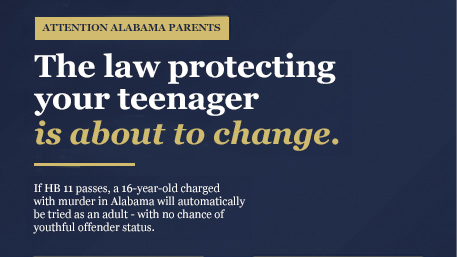
If your teenager is facing serious criminal charges in Alabama, the difference between being treated as a youthful offender and being prosecuted as an adult is often the difference between a closed record with a three-year sentencing cap and a permanent felony conviction with decades in prison. That distinction is about to change for an entire category of cases, and parents in Birmingham need to understand exactly how.
How Youthful Offender Status Works Right Now
Alabama's Youthful Offender Act, codified at Alabama Code Section 15-19-1, currently allows a person under the age of 21 to apply for youthful offender (YO) status if the offense occurred before they turned 19. When a judge grants YO status, three critical things happen. The proceedings and records are kept confidential and sealed from public view. The person is not formally convicted of a felony or misdemeanor, which protects them from the long-term collateral consequences of a criminal record, including barriers to housing, employment, student loans, and professional licensing. And perhaps most significantly, the maximum sentence for any YO conviction is capped at three years in custody, regardless of what the underlying charge was.
That last provision is what drives the current political debate. Under existing law, a 17-year-old granted YO status after a capital murder charge faces a maximum of three years, the same as a 17-year-old granted YO status for burglary. The decision rests entirely with the trial judge, and judges already deny YO status in roughly nine out of ten murder cases, but that discretion is what proponents of change want to eliminate.
HB 146 (2025) and HB 11 (2026) — What Is Actually on the Table
State Representative Phillip Pettus, a retired state trooper, has been pushing a version of this legislation for three consecutive sessions. In March 2025, the Alabama House passed HB 146 by a vote of 67-33, which would have eliminated YO eligibility for anyone 16 or older charged with intentional murder. That bill did not clear the Senate before the session ended.
Pettus refiled the legislation as HB 11 for the 2026 session. The House passed HB 11 on January 27, 2026, by a vote of 94-0 with 8 not voting, and the bill moved to the Senate Judiciary Committee, which gave it a favorable report on March 18, 2026. The 2026 version includes an important carve-out that the earlier bill lacked: YO status remains available if the initial capital murder or murder charge is later reduced to a lesser offense. As of the latest legislative action, the bill is advancing toward final passage, and if enacted it is expected to take effect October 1, 2026.
A companion measure, SB 25, contains substantially the same language and is moving through the Senate on a parallel track.
What This Means in Practical Terms
If HB 11 becomes law, a 16-year-old charged with capital murder or intentional murder in Jefferson County will be charged, arrested, and tried as an adult automatically. No YO application hearing. No judicial discretion to weigh the circumstances. No three-year cap. A conviction carries the adult penalty, which for capital murder means life without parole or the death penalty.
For families, this changes how charging decisions and plea negotiations must be approached from the very first day. If a prosecutor initially files a capital murder charge against a teenager and later reduces it to manslaughter, YO eligibility reopens. That negotiation window is where experienced defense counsel can create real outcomes.
The Unintended Consequences Critics Are Warning About
Several senators raised concerns during the committee hearing that deserve attention. Alabama's accomplice liability law treats someone who participates in a felony during which a murder occurs as equally liable for the murder, even if they did not personally cause the death. Under HB 11, a 16-year-old accomplice who was present at a robbery where a co-defendant shot someone would be stripped of YO eligibility automatically, even if they never handled the weapon. This makes careful defense strategy at the charging stage more important than ever.
If Your Teenager Is Facing Charges, Move Fast
Youthful offender decisions are made early in the case, and the evidentiary hearing is your one real opportunity to show the court why your child deserves that status. Jolee's Law, which is part of the pending legislation, also requires 10 days' notice to victims and an evidentiary hearing on injuries before YO can be granted in covered cases, which means the procedural burden is increasing even for eligible offenses.
Elizabeth Hunter & Associates represents young adults and teenagers facing serious charges throughout the Birmingham metro. If your child has been arrested, call (205) 203-9439 before they speak to anyone else.