
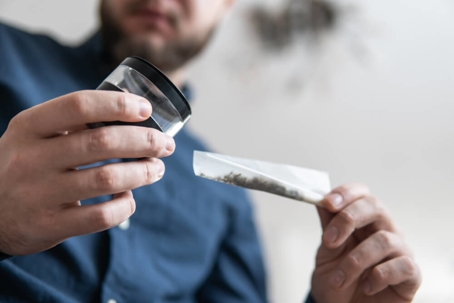
Getting stopped by an officer and suddenly hearing the words “drug paraphernalia charge” can turn a normal day into a crisis in a matter of minutes. One moment, you are dealing with a routine traffic stop or a visit to a friend’s house, and the next, you are in handcuffs while an officer holds up a pipe, a baggie, or some other item and starts asking pointed questions. It can feel like your entire future is hanging on how that conversation goes.
As the shock wears off, most people start asking the same questions. How serious is this? Is it just a ticket, or can you go to jail? Will this follow you on background checks when you apply for jobs, apartments, or school programs in Alabama? If your child, partner, or friend was charged, you may be scrambling to understand what the charge even means before the first court date shows up on the calendar.
At Elizabeth Hunter & Associates PLLC, we sit across from people in Birmingham and throughout Alabama every week who are facing drug paraphernalia charges and trying to make sense of what comes next. We know how local police, prosecutors, and judges actually treat these cases, and we know how easy it is to underestimate a paraphernalia charge until it is too late. In the sections that follow, we walk through how Alabama law defines paraphernalia, what penalties you are really facing, and what defenses and options we look for when we build a strategy around this kind of charge.
What Drug Paraphernalia Charges Mean Under Alabama Law
In Alabama, drug paraphernalia is not limited to obviously illegal items that you would only see in a head shop. The law focuses on items that are used, intended for use, or designed for use in planting, growing, making, testing, packaging, storing, or using controlled substances. That can include classic items like glass pipes or bongs, but it can also include very ordinary objects if police believe they are tied to drug use or distribution.
Common examples we see in Alabama cases include pipes, bongs, grinders, scales, small baggies, digital spoons, syringes, and even aluminum foil or spoons with burn marks. A soda can with holes punched in it, a hollowed-out pen, or a plastic bottle converted into a device for inhaling smoke can all be treated as paraphernalia if officers think drugs are involved. The same item can be completely legal in one context and charged as paraphernalia in another, depending on how it is being used and what else is found nearby.
Most drug paraphernalia charges for personal use are filed as Class A misdemeanors in Alabama. That puts them in the most serious category of misdemeanors, with potential exposure to significant fines and up to a year in jail in many cases. Even if a person never serves a day behind bars, a conviction usually creates a criminal record that can show up on background checks when employers, landlords, and schools look at someone’s history.
Intent is a key concept that many people do not hear about until they are already in court. It is not enough that you owned or were near an item. To convict, the state generally has to show that you intended to use that item with illegal drugs. That intent is rarely proven by a direct confession, so prosecutors rely on circumstances. At Elizabeth Hunter & Associates PLLC, one of the first things we do is help clients understand how prosecutors will try to use the surrounding facts to argue intent and how those arguments can be challenged.
Charged with drug paraphernalia in Alabama? Contact us online or call (205) 203-9439 to schedule a consultation with an experienced criminal defense attorney today.
How Police & Prosecutors Decide What Counts as Paraphernalia
From a legal perspective, the piece of plastic or metal that an officer picks up is only part of the story. Law enforcement in Alabama typically decides whether something is paraphernalia by looking at the total picture. This includes where the item was found, whether there were drugs or residue nearby, what the person said at the scene, and how the item looks based on the officer’s training and experience.
If officers find a pipe with visible residue next to a bag of marijuana, they will often treat that as drug paraphernalia. If they find a digital scale, stacks of small baggies, and cash next to a quantity of pills or powder, they may argue the items are paraphernalia connected to distribution. On the other hand, if a scale is found alone in a kitchen with no drugs or other indicators, the argument becomes weaker. We regularly see cases where the context is not nearly as clear as the police report suggests.
Prosecutors build their case using the officer’s report, photographs, lab reports confirming residue, and any statements made by the person charged or by witnesses. They may highlight things like burn marks on a spoon, residue on a pipe, or the presence of multiple items together to argue that there is no innocent explanation. They can also use text messages, social media posts, or other electronic evidence, especially in cases tied to alleged distribution.
It is easy to assume that once officers label something paraphernalia, the charge is a done deal. In reality, that label is an accusation, not a conclusion. Intent is most often inferred, not proven directly, and those inferences can be wrong or overstated. As a Birmingham criminal defense firm, we routinely dig into police reports, body camera footage, and lab results to see whether the state’s story about how an item was used actually fits the evidence, or whether officers jumped to conclusions based on assumptions about drugs.
Common Situations That Lead To Drug Paraphernalia Charges in Alabama
Understanding how you ended up with a paraphernalia charge can make the legal process feel a little less overwhelming. In Alabama, one of the most frequent scenarios involves traffic stops. An officer pulls someone over for speeding, a minor equipment issue, or suspected impaired driving. During the stop, the officer claims to smell marijuana or sees something suspicious in plain view and asks to search the vehicle. A pipe, grinder, rolled bills, or other items are then found in the console, glove box, or under a seat.
Another common situation involves paraphernalia found in shared spaces. We see cases where police come to an apartment for a noise complaint, a welfare check, or an unrelated call and spot items they believe are linked to drug use. If there are several people in the home, officers may arrest one or more occupants even if no one admits ownership. The same problem arises with shared vehicles. A pipe in the backseat or a baggie in a trunk can lead to arguments about who really had control over the item.
Younger adults and college students often face paraphernalia charges involving vape devices, makeshift smoking devices, or containers with trace amounts of residue. For many families, a call from a child or relative being held in a local jail on a paraphernalia charge is their first contact with the criminal system. In these cases, the fear is not just about immediate penalties, but about how a single incident could affect scholarships, campus discipline, or future job applications in Alabama.
Paraphernalia charges also frequently travel with other offenses. We regularly see them paired with simple possession of marijuana or other controlled substances, possession with intent to distribute, and DUI when officers believe someone was driving under the influence of drugs. How the paraphernalia count interacts with those other charges can significantly affect strategy. At Elizabeth Hunter & Associates PLLC, we look closely at the entire set of charges rather than treating paraphernalia in isolation, because decisions on one count can impact the outcome on others.
Potential Penalties & Real-World Consequences of a Paraphernalia Conviction
When people hear “misdemeanor,” they sometimes assume it means a minor issue that will fade with time. In Alabama, that is not how Class A misdemeanors work. A drug paraphernalia conviction can carry up to a year in the county jail and substantial fines. While not every case results in jail time, the risk is real, especially for those with prior records or additional charges. Courts can also impose probation that lasts months or even years.
Probation is not simply a warning. It often comes with conditions such as random drug testing, counseling or treatment requirements, community service, and regular check-ins with a probation officer. Missing appointments, failing a drug test, or violating other rules can lead to probation revocation and possible jail time. For someone juggling work, school, or family responsibilities in Birmingham or elsewhere in Alabama, those requirements can be disruptive and stressful.
Beyond the courtroom, a paraphernalia conviction becomes part of your criminal history. Employers, landlords, and licensing boards increasingly run background checks. Seeing a drug-related conviction can raise questions about reliability or judgment, even if the underlying facts were relatively minor. That can make it harder to get certain jobs, professional licenses, or rental housing. For students, schools and colleges may have their own discipline processes that are triggered by criminal charges or convictions.
There can also be immigration consequences for some non-citizens, since drug-related offenses often carry special weight under federal immigration law. Multiple drug convictions can make future cases harder, since prosecutors and judges in Alabama commonly consider patterns of behavior when they decide what offers to make or what sentences to impose. One of our roles at Elizabeth Hunter & Associates PLLC is to walk clients through both the formal penalties and these real-world impacts so that any decision they make about pleas or trial is fully informed, not based on wishful thinking or incomplete information.
Defenses & Strategies We Use In Alabama Paraphernalia Cases
A paraphernalia charge can feel like the evidence is stacked against you. The item was found, and a police officer recorded it in a report. That does not mean a conviction is automatic. We start by looking at how the police encountered you and the item. If an officer stopped your vehicle without a valid reason, extended a traffic stop without legal justification, or searched your car, your person, or your home without proper consent or probable cause, then we may be able to challenge that search. When a court finds a search unconstitutional, key evidence can be suppressed, which can dramatically weaken the state’s case.
We also examine who actually possessed the item. If the paraphernalia was in a shared vehicle or residence, the state must still prove that you, and not someone else, had control over it or the right to control it. That concept, often called constructive possession, is more complex than simply being nearby. We look for inconsistencies in the reports about where the item was found, who was seated where, and who had access to the area in question. In some Alabama cases, the lack of clear proof of possession has been the difference between a conviction and a dismissal or reduction.
Intent is another critical battleground. The prosecution will argue that the item was intended for use with illegal drugs, but many items can have legitimate uses. A digital scale might be used for cooking or hobbies. A piece of glassware might be part of a collection. Even a pipe or similar item might be sold for tobacco or other legal uses. We look for evidence that undercuts the state’s theory, such as the absence of drugs or residue, the location of the item, or testimony about lawful uses.
Not every case hinges solely on trial issues. In many Alabama paraphernalia cases, we combine legal challenges with negotiation strategies. This can include pushing for a reduction to a less serious offense, seeking dismissal of the paraphernalia count in exchange for addressing another charge, or advocating for alternative resolutions that focus on treatment or education rather than punishment. At every stage, we approach these cases assertively in court while also staying focused on what matters most to each client, whether that is avoiding jail, protecting a professional license, or keeping a path open for future record relief.
First-Time Offenders, Diversion Options & Avoiding a Permanent Record
For many people, a drug paraphernalia charge is their first contact with the criminal courts. Judges and prosecutors in Alabama often recognize the difference between a first-time offender and someone with a long record of drug cases, but they still take these charges seriously. That creates an opportunity, but not a guarantee, for better outcomes. How that opportunity is used depends heavily on how the case is presented and what steps a person takes early on.
Some courts and prosecutors in Alabama are willing to consider diversion programs, deferred prosecution, or other alternatives in appropriate paraphernalia cases, especially for first-time defendants who are taking responsibility for underlying issues like substance use. These approaches can sometimes result in charges being dismissed after the person completes agreed requirements, or in convictions that are structured in a way that reduces long-term harm. Availability and terms vary from one court to another, and even from one prosecutor to another within the same county.
Taking proactive steps can make a real difference. Voluntarily enrolling in counseling, substance abuse treatment, or educational programs before court can show that you are taking the situation seriously. For young defendants, strong support from family and involvement in school or work can help us present a fuller picture of who they are beyond a police report. We often work with clients to gather documentation of treatment, employment, or school performance to share in negotiations or at sentencing.
Because these options are not uniform across Alabama and can change over time, it is risky to rely on what a friend heard in a different county or what a generic website says about “standard deals.” At Elizabeth Hunter & Associates PLLC, we stay connected with professional networks and appear regularly in Birmingham-area courts and beyond. That day-to-day involvement helps us understand what specific judges and prosecutors are currently willing to consider for first-time paraphernalia defendants, and how to position a case to make the most of any available opportunity to avoid a permanent record.
What To Do Right Now If You Are Facing Drug Paraphernalia Charges in Alabama
Once you have a paraphernalia charge, the decisions you make in the first few days can shape everything that follows. The single most important step is to avoid making statements about the facts of the case to police, prosecutors, or even well-meaning court staff without first talking with a defense lawyer. Simple comments like “It was just for personal use” or “I did not know it was in the car” can be twisted or used out of context later. You are not required to explain yourself at the roadside or in jail to preserve your rights.
It also helps to get organized quickly. Gather any paperwork you received, including traffic citations, arrest reports, and bond documents. Write down your memory of what happened before, during, and after the encounter with police, including what the officer said and did, where everyone was standing, and whether you felt pressured to consent to a search. Details that seem small now can become critical later when we challenge a stop or search in an Alabama courtroom.
Reaching out for a legal consultation before your first court date can reduce some of the fear of the unknown. In an initial meeting with our firm, we typically review the documents you received, go over a detailed account of the incident, explain what to expect at the first appearance or arraignment, and outline the main paths a paraphernalia case might take in the local court where it is filed. Our goal is to replace guesswork with a clear picture of your options and the pros and cons of each route.
You may also be unsure what, if anything, to tell your employer, school, or family members. There is no one-size-fits-all answer. The right approach depends on your job duties, school policies, and the stage of the case. We regularly advise clients on how to handle these conversations in a way that protects both their legal case and their plans. At Elizabeth Hunter & Associates PLLC, our strong communication practices and free initial consultations are designed to give you space to ask candid questions and get straightforward answers before you make any moves that are hard to undo.
How Elizabeth Hunter & Associates PLLC Approaches Drug Paraphernalia Defense
Facing a drug paraphernalia charge in Alabama can feel isolating, but you do not have to navigate it alone or try to become a legal authority overnight. At Elizabeth Hunter & Associates PLLC, we combine a deep grounding in Alabama criminal law with an approach that starts by listening. We want to know what this case means for you, whether that is concern about staying out of jail, keeping your job, protecting your immigration status, or shielding your child from long-term consequences. That understanding shapes every recommendation we make about how to move forward.
When we take on a paraphernalia case, we investigate the facts independently, not just accept the police version on paper. We scrutinize the traffic stop or encounter, the search, the handling of evidence, and the way intent and possession are being framed. We prepare as if the case may go to trial, which often strengthens our hand in negotiation. At the same time, we stay open to resolutions that align with your goals, whether that means fighting in court, pursuing a reduction, or seeking a program that leads to dismissal if you complete certain steps.
Because our firm is based in Birmingham and appears regularly in courts across Alabama, we understand how different judges and prosecutors approach paraphernalia and other drug-related cases. That local insight helps us anticipate potential obstacles and opportunities that would not be obvious from reading a statute or a generic article online. Our ethical and transparent approach means we will not promise results that no one can control. Instead, we give you a realistic assessment of your case and work hard to reach the most favorable outcome for your circumstances.
Facing a drug paraphernalia charge? Schedule a consultation online or call (205) 203-9439 today to speak with an experienced Alabama criminal defense attorney at Elizabeth Hunter & Associates PLLC.